The short answer
How to find micro SaaS ideas: start from demand you can see, such as tools with many users, then filter for weak spots: low ratings across many reviews, old update dates, repeated complaints. Finish by checking pricing on each rival's own site. Ideas from data beat ideas from brainstorming.
- Demand first, idea second.
- A weak incumbent is a low rating backed by many ratings.
- 730 extensions in our crawl had 1,000+ users, 50+ ratings and under 3.5 stars.
- Read reviews for the feature list.
Brainstorming feels productive. You fill a page with ideas, pick the one you like, and build for three months. Then you learn nobody was looking for it.
There's a duller method for how to find micro SaaS ideas, and it works better. It starts with demand you can count.
Step 1: start where users already are
New to the term? What micro SaaS means is the short primer. Next, pick a store that shows numbers. The Chrome Web Store lists a user count and a rating for every extension, which makes it a decent demand map.
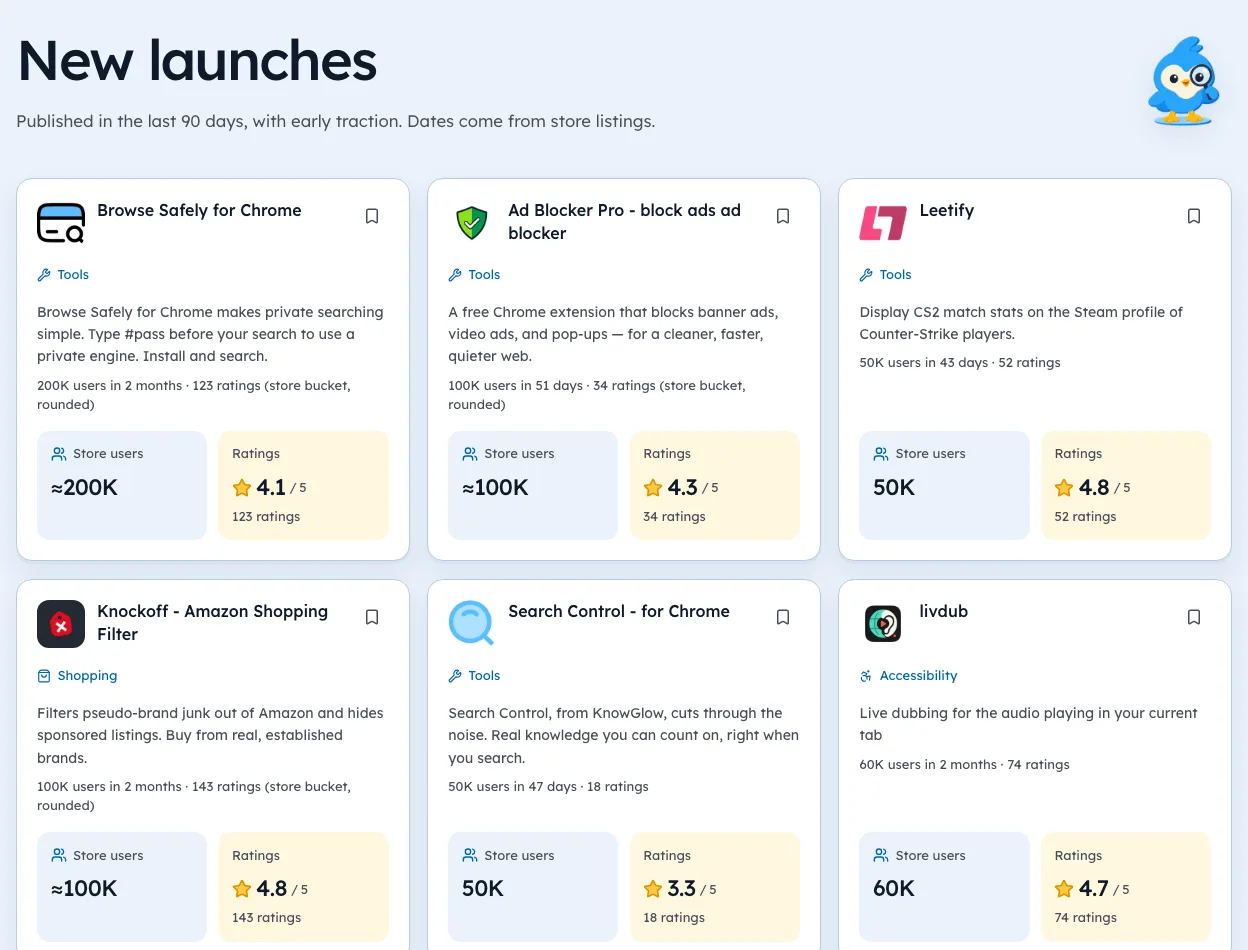
In our crawl, 61,820 extensions had data and 7,967 had 10,000 or more users, observed 2 Oct 2026. That top slice is your search area. Below it, demand is hard to tell apart from noise.
Step 2: filter for weakness
Demand alone points you at giants. You want demand plus a reason users would switch.
| Signal | What it suggests | How strong |
|---|---|---|
| Low rating, 500+ ratings | Many people are unhappy | Strong |
| Low rating, under 20 ratings | A few loud people | Weak |
| Listing update over a year old | Maybe no one is fixing things | Medium |
| Same complaint in many reviews | A clear missing feature | Strong |
| Big publisher, companion tool | Hard to replace | Usually a dead end |
In our 3 Oct 2026 data, 730 extensions had 1,000+ users, at least 50 ratings and an average under 3.5 stars. Two weak signals together beat one strong-looking one.
To test this on real listings, start with the web scrapers page.
Step 3: read what people actually say
Open the store page and sort reviews by newest. Read ten. Write down every complaint that shows up twice.
That list is better than any brainstorm. It's written by people who already installed the thing, which means they wanted it.
Step 4: check whether anyone pays
This is the step people skip, and it's the one that hurts later. Open the rival's own website and look for pricing, plans or an upgrade page.
If you find none, write "unknown". Plenty of paid extensions take payment on their own site and never mention price in the store listing. We learned this the hard way when our own early detector called big paid tools blank.
Step 5: size the narrow version
A broad idea like "better screenshots" sounds big. A narrow one like "screenshots for QA testers with Jira upload" is easier to sell.
- Who exactly would pay?
- What would they type into Google?
- Where do they already hang out?
How to find micro SaaS ideas faster
We're biased here. Ext Watch runs steps one and two for you across its crawl and shows the dates behind each number. Steps three and four still need a human, and that's how it should be.
For ideas already sorted by who pays, read micro SaaS ideas that make money. Or try the micro SaaS idea finder.
One small step
Open the store, pick a category you know, and note three tools with many users and low stars.
Then stop brainstorming and start reading.
Questions people ask
Where can you find micro SaaS ideas?
App stores, extension stores, review sites and the forums of a job you know. Stores are useful because they show users and ratings.
How do you validate a micro SaaS idea?
Find people paying for something close, read their complaints, and ask a few to try a rough version.
Is Reddit good for micro SaaS ideas?
It's good for complaints in people's own words. It's poor for knowing how many people share them.
Where these numbers come from
- chromewebstore.google.comChrome Web StoreAccessed 3 Oct 2026
Part of our guide: What Is Micro SaaS? A Plain Guide With Real Examples. More in Extension ideas.


541 extensions tracked in Web scrapers. See them all.
Real demand, weak competition, with the numbers behind each one. Updated 3 Oct 2026 from our Chrome Web Store crawl